
Amid the wave of industrialized construction and green, low-carbon development, polyurethane sandwich panels (PU sandwich panels), a lightweight, high-performance, and multifunctional composite material, are becoming a popular insulation material in both industrial and residential construction due to their unique performance advantages.
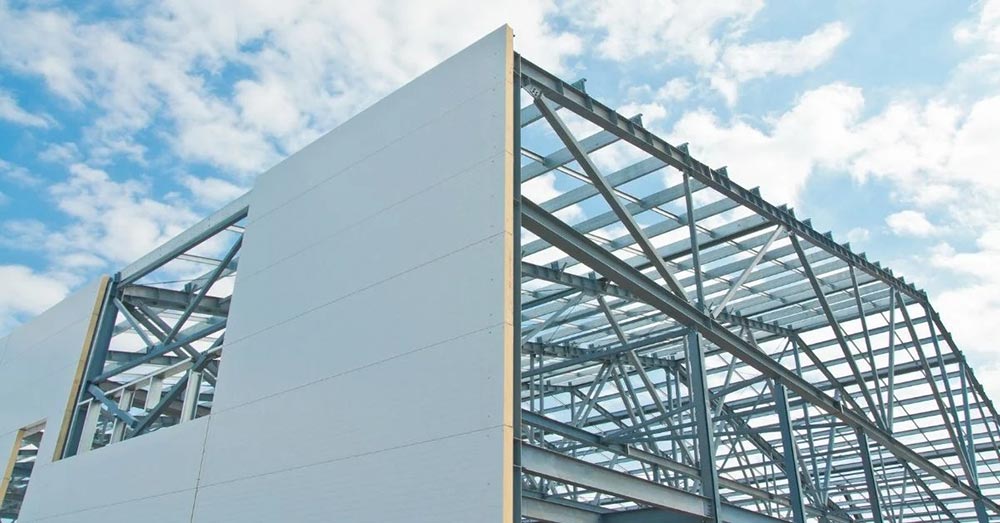
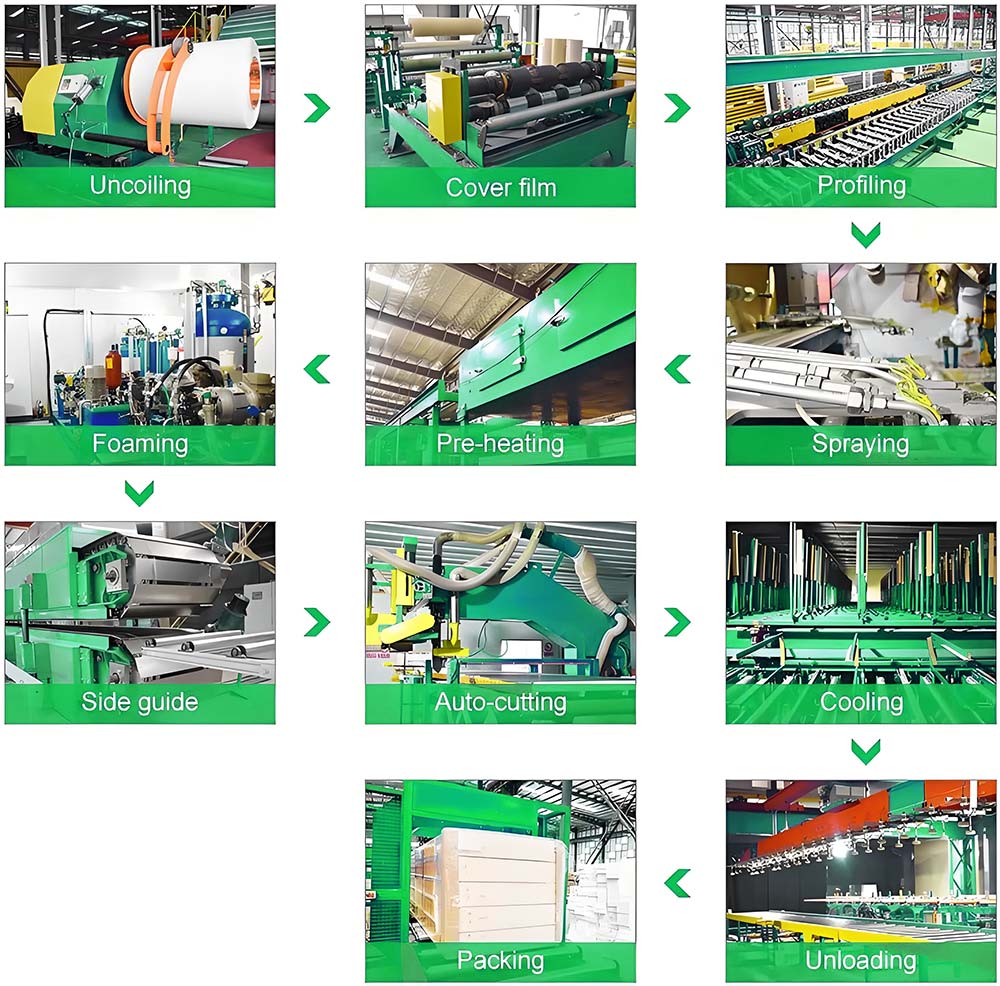
A polyurethane sandwich panel is a composite panel made with a polyurethane (PU) foam core, laminated to two metal panels on a continuous production line. Its core principle is to leverage the high thermal insulation, heat insulation, and sound absorption properties of the polyurethane core, combined with the structural strength of the panels, to create a lightweight, high-strength, and multifunctional integrated building material.
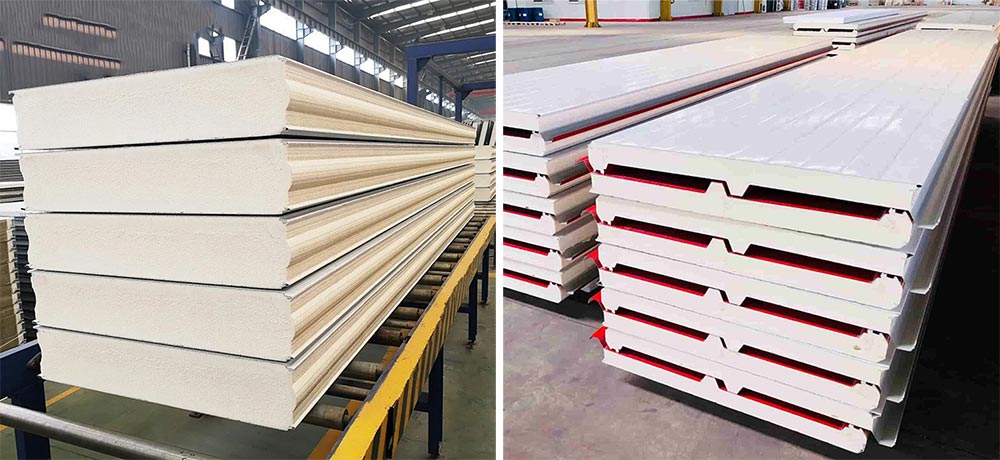
| Product name | PU/PUF/PUR/PIR Sandwich Panel |
| Core material | Polyurethane |
| Core material thickness | 50/75/100/150/200mm |
| Metal sheet thickness | 0.4-0.7mm |
| Length | Less than 11.8m |
| Width | Wall panel: 930/1000/1120mm; Roof panel: 1000mm |
| Colors | Grey, white grey, blue, black (customizable) |
| Certificate | CE/FM/SGS/ISO9001:2000 |
| Fire proof | B1/B2/B3 |
| Application temperature | -50ºC-150ºC |
| Place of Origin | Shandong, China |
| Service life | More than 15 Years |
After-sale Service | Online Technical Support, Onsite Installation, Onsite Training |
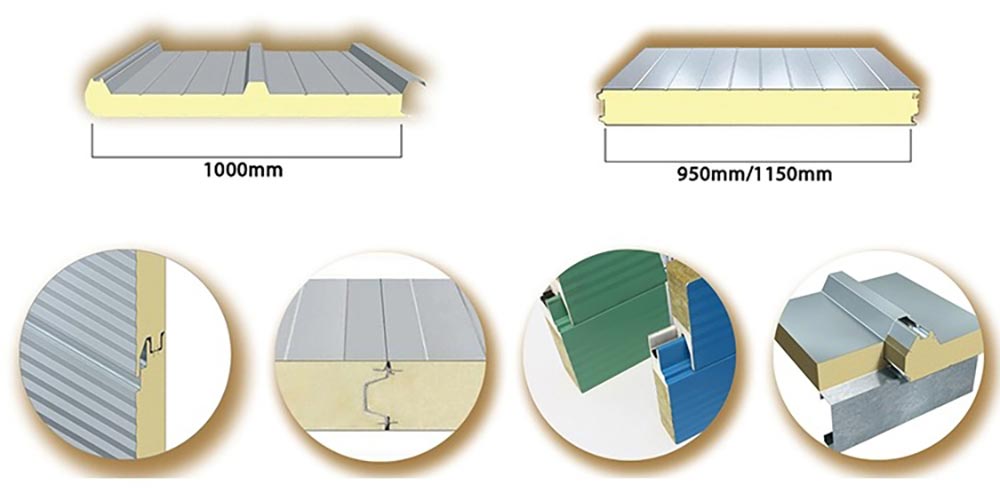
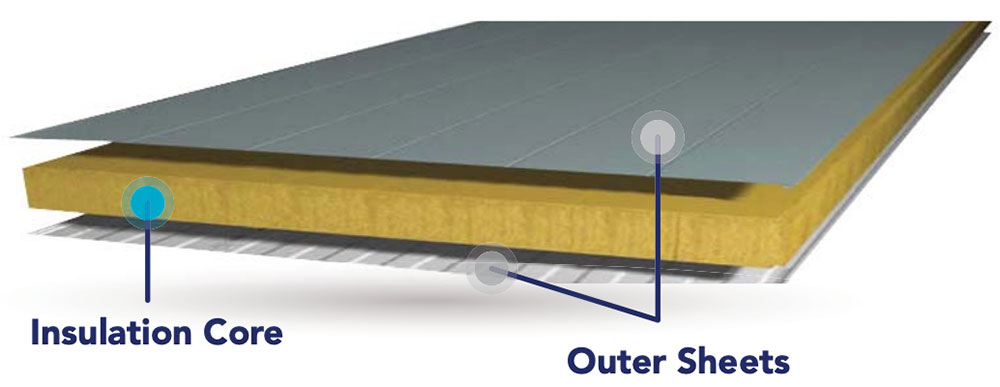
Simply put, it’s like a “sandwich cookie”: the top and bottom layers are the “cookie skin” (metal panels), and the middle layer is the “filling” (polyurethane foam). These three layers are combined into a single piece using automated equipment, providing both structural support and functional protection.
PUF insulation metal panels can provide a variety of colors, surface textures (such as flat, embossed, corrugated, etc.) and coating options, with strong decorative and good weather resistance, and long service life. The appearance of the building is clean and beautiful, with low maintenance costs. Meanwhile, the excellent insulation performance meets the evaluation standards for global green buildings.
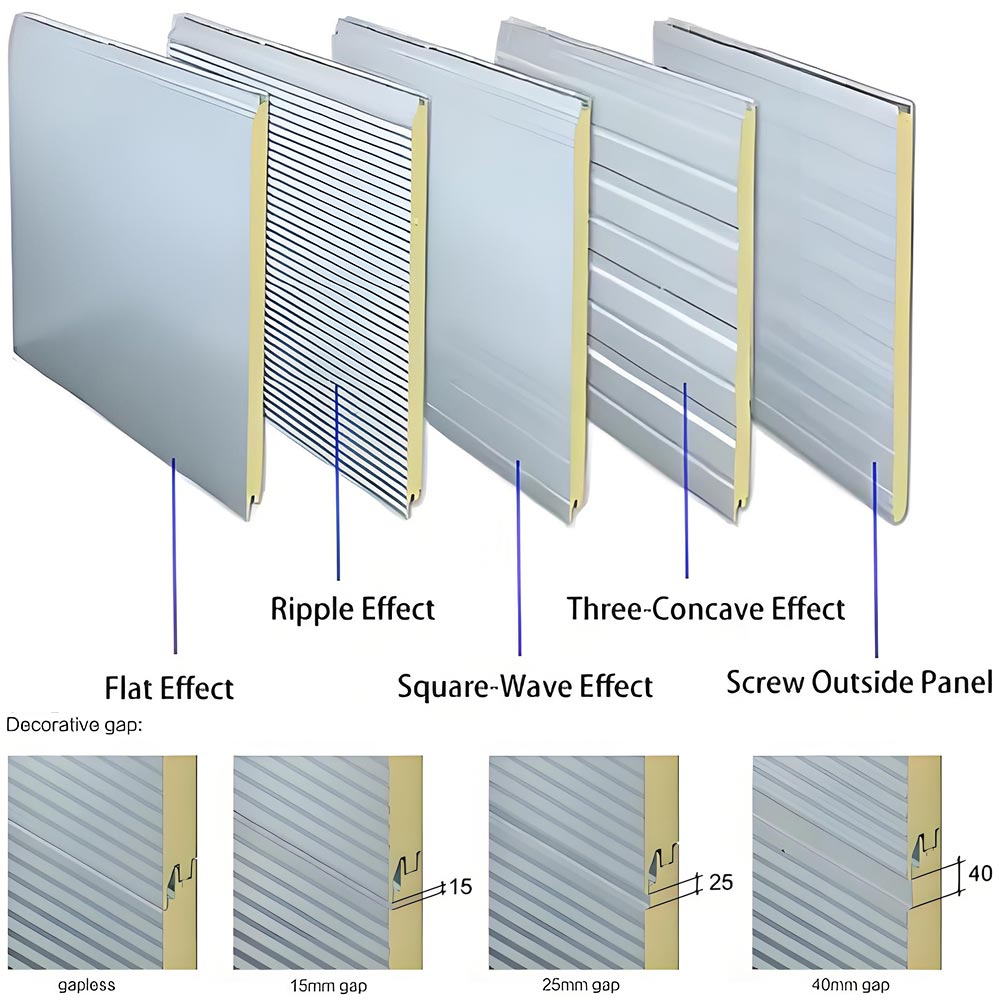
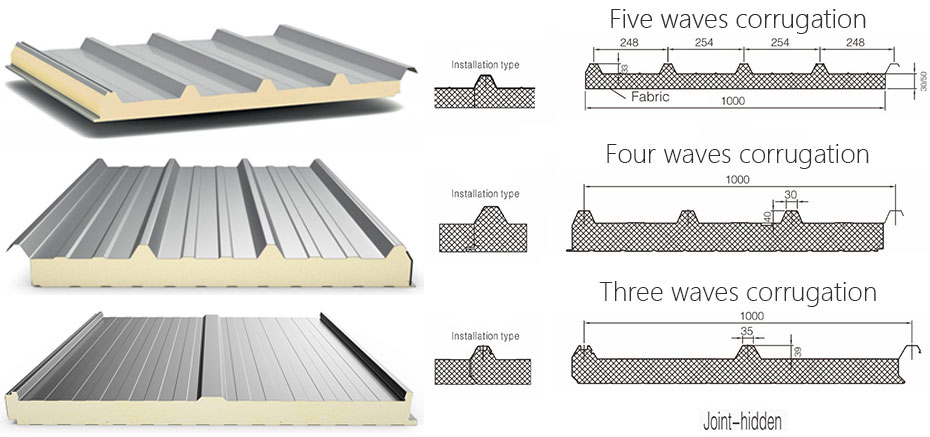
PU insulation roof panels come in different types such as three wave roof panels, four wave roof panels, and five wave roof panels, which can be customized according to the customer’s usage scenario. Industrial production of products, precise specifications and dimensions, and good overall integrity.
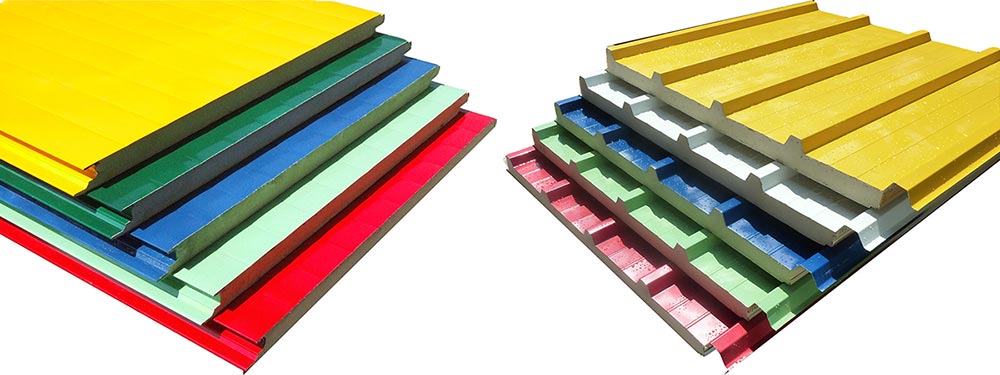
The common colors of polyurethane foam sandwich panels are white, gray, white gray, big wall gray, blue, black, red, etc. We can also customize other colors for you.
1. Industrial Buildings:
Industrial plants: As wall and roof enclosures, they offer both insulation and load-bearing properties, making them suitable for industries such as machinery manufacturing, electronics, and chemicals.
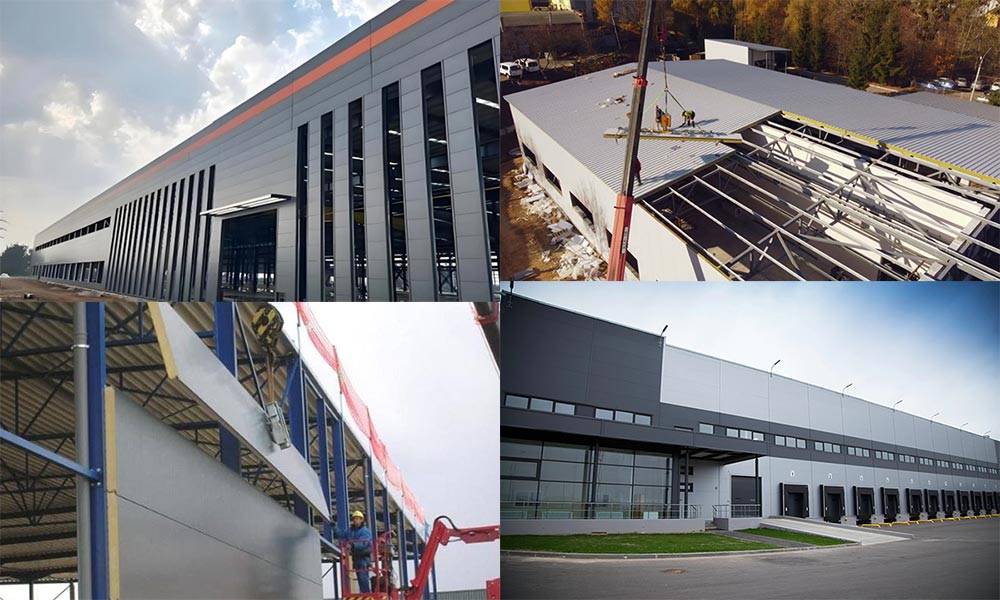
industrial buildings
Cleanrooms: Their smooth, easy-to-clean surface (with optional antibacterial coating) and high insulation efficiency meet the needs of temperature and humidity-sensitive applications such as semiconductors and pharmaceuticals.
2. Cold Chain Logistics:
For cold storage (-25°C to +5°C), refrigerated trucks, and fresh-keeping facilities, where thermal insulation performance is extremely demanding, polyurethane sandwich panels’ low thermal conductivity can significantly reduce cooling loss (saving over 30%), making them a standard material for cold chain facilities.
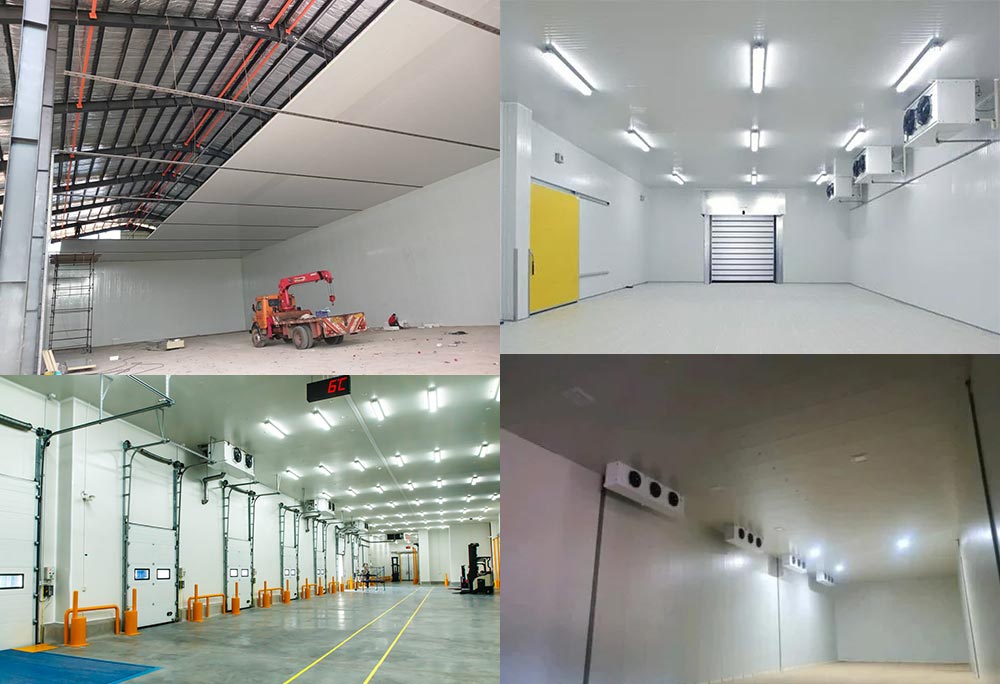
cold storage
3. Public Buildings:
Long-span buildings like stadiums, exhibition halls, and airport terminals utilize their lightweight and high-strength properties to achieve column-free, spacious designs. Furthermore, colored panels enhance the building’s aesthetics (e.g., imitating stone or wood grain effects).
4. Energy and Infrastructure:
Photovoltaic rack enclosures, wind turbine tower protection, and highway noise barriers utilize their weather resistance and impact resistance to adapt to complex outdoor environments.
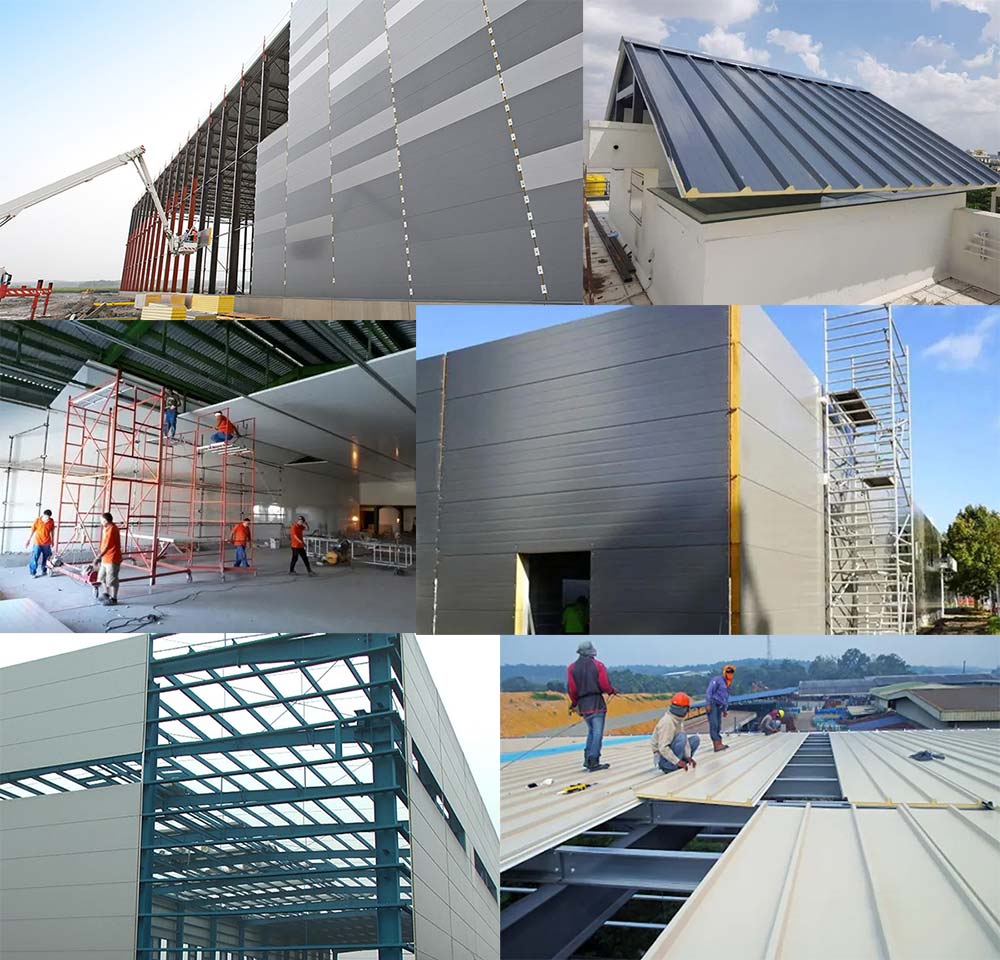
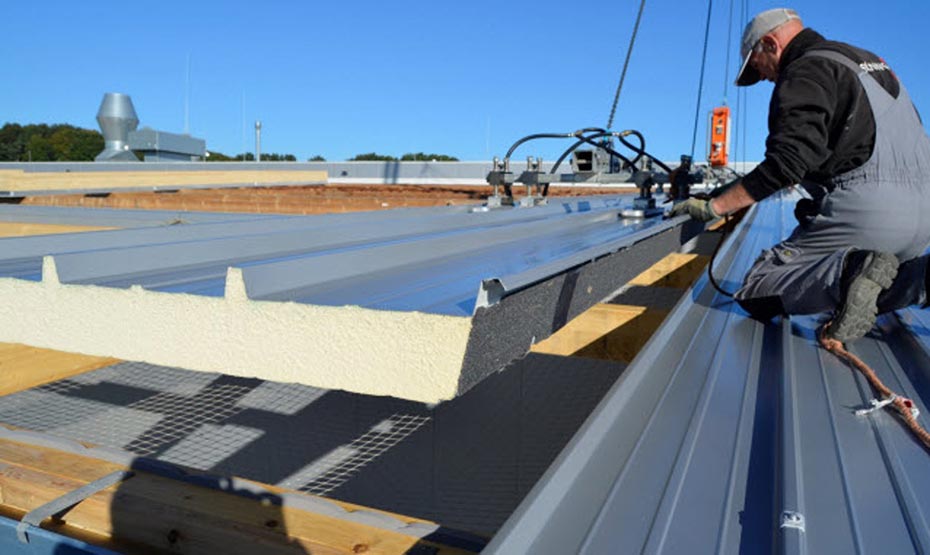
PUF Sandwich Panels Installation
Compared to traditional sandwich panels (such as rock wool and glass wool), the performance advantages of polyurethane sandwich panels stem from their inherent molecular structure and composite process, primarily reflected in the following aspects:
1. Ultra-Efficient Thermal Insulation: Polyurethane has a thermal conductivity as low as 0.022-0.024 W/(m·K) (approximately half that of rock wool and one-third that of glass wool). Its closed-cell structure almost completely blocks air convection and heat radiation, resulting in thermal insulation performance far exceeding that of traditional materials. Experimental data shows that a 100mm thick polyurethane sandwich panel offers equivalent insulation performance to a 150mm thick rock wool panel, significantly reducing building energy consumption (heating/cooling costs by 30%-50%).
2. Lightweight and High-Strength, Reducing Building Loads: The panel’s overall density is only 1/20-1/30 of that of traditional concrete, and a weight of 100kg/m² meets the structural requirements of most buildings. Furthermore, the composite structure of the polyurethane core and metal facing imparts excellent flexural strength (≥0.5MPa) and impact resistance, making it particularly suitable for long-span buildings or applications with high load-bearing requirements.
3. Waterproof and Weather-Resistant: The closed-cell structure of polyurethane foam ensures a water absorption rate of ≤1% (rock wool has a water absorption rate of >5%). Combined with the panel’s polyester coating (or fluorocarbon coating), it resists long-term erosion from rain, salt spray, and UV rays, making it suitable for high-humidity environments (such as cold storage and coastal areas) or harsh climates (temperature ranges from -50°C to +80°C).
4. Easy Installation and High Construction Efficiency: The panels can be customized to desired lengths (up to 12 meters). The tongue-and-groove design on the edges eliminates the need for additional sealing during installation and allows for quick fastening with screws or clamps. This increases installation efficiency by over 50% compared to traditional materials, significantly shortening construction time.
5. Environmentally Friendly and Recyclable, Compliant with Green Building Standards: The polyurethane core material contains no harmful substances such as asbestos and formaldehyde, and emits very low smoke when burned. Discarded panels can be recycled (the metal panels and core material are separated and then recycled separately), meeting the requirements of green buildings under carbon reduction targets.
1. Are you a manufacturing factory or a trading company?
We are a production factory and welcome you to visit us anytime. The workshop has advanced and complete sheet metal production equipment to ensure product quality and price competitiveness.
2. What is the delivery time?
The delivery time depends on the quantity. Usually within 7-10 days after receiving the deposit.
3. Can logos be printed on sandwich panels?
Yes, please notify us officially before production and first confirm the design based on our samples. We can print your logo on the packaging film.
4. Can I bring a sample for inspection?
We can provide you with free samples, but international shipping fees are not included. You will need to pay for the shipping yourself.
5. How can I get a quote from you?
You can contact us online or via email. If you have drawings, we can provide a quotation based on your drawings. Alternatively, please let us know the length, width, and eave height, and we will provide you with an accurate quotation.
6. What can your product be used for?
Our products can be used in factories, logistics centers, warehouses, refrigerated warehouses, etc.
7. What is the payment deadline?
30% deposit shall be paid by wire transfer before production, and the remaining 70% shall be paid before shipment.